


03 Jun State of China’s Auto Market – May 2026
Written by Bill Russo, Founder & CEO of Automobility Ltd.
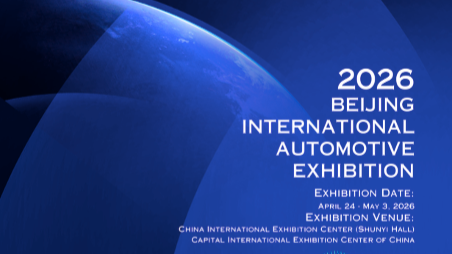
China is no longer just leading in electrification—it is defining the next phase of competition, where intelligence, software, and ecosystem integration take priority over hardware alone.
In our latest analysis, we break down what the Beijing Auto Show revealed about the transition from smart EVs to intelligent mobility systems—and why this shift will reshape how value is created across the industry.
Read the full article here:
2026 Beijing Auto Show: Smart EVs are Scaled — and the Industry Moves Toward Intelligent Mobility
And if you are in Shanghai on Monday, May 18, from 2:00 p.m. to 4:00 p.m. please join AmCham Shanghai’s Automotive Committee for an in-person recap of the key highlights from the Beijing Auto Show 2026.
Recap of Beijing Auto Show 2026 | AmCham Shanghai
Key Headlines Summary through April 2026
📉 China auto demand weakened further in April, with domestic sales remaining under pressure as March’s rebound proved temporary and consumer demand stayed soft.
⚡ Electrification trend continues despite weaker market conditions, with NEV penetration rebounding above 53% in April as ICE demand deteriorates faster than EV demand.
🎯 Policy normalization is exposing underlying price sensitivity, particularly in mass-market EV segments where post-subsidy demand remains fragile.
🌍 Exports have become the industry’s primary stabilizer, with export share surging to a record ~36% in April and offsetting weak domestic absorption.
🚢 China’s export dependence is accelerating structurally, as global markets increasingly absorb excess production capacity from a slowing domestic market.
🧠 Smart EV competition remains intense and increasingly polarized, with Xiaomi, HIMA, Leapmotor, Li Auto, and Geely gaining share amid volatile monthly demand swings.
🏁 Chinese OEMs continue gaining ground over foreign brands, as domestic players dominate NEVs while foreign OEMs remain concentrated in shrinking ICE segments.
🏭 China’s auto industry is evolving into an export-anchored, overcapacity-driven system, where global demand—not domestic growth—supports utilization and scale.
China’s Auto Market Hits a Turning Point as Domestic Weakness Drives Global Expansion
China’s auto market remained under clear pressure through April 2026, with passenger vehicle sales down roughly 20% year-over-year as weak domestic demand persisted despite improving NEV penetration. What initially appeared to be temporary seasonal distortion is increasingly revealing something more structural: underlying consumer softness in a slower-growth environment. While electrification continues advancing, the market is becoming far more demand-sensitive, with policy normalization, pricing pressure, and weaker consumer confidence exposing heightened elasticity in mass-market EV segments.
At the same time, the composition of the market continues shifting rapidly. NEV share surged back above 60% in April after a weak start to the year, reinforcing that the long-term transition remains intact even as total demand softens. Meanwhile, exports have become an increasingly critical offset to domestic weakness, sustaining industry utilization and supporting profitability as Chinese OEMs expand into less saturated and higher-margin overseas markets. The result is an industry that is no longer driven primarily by domestic volume expansion, but by a combination of electrification, export scale, and increasingly intense competition within China’s evolving smart EV ecosystem.
China Auto Market Adjusts Further in April as Policy Effects Fade
China’s auto market continued to normalize in April 2026 following the late-2025 policy-driven surge, with industry volumes declining ~4.8% YoY through the first four months. While the slowdown confirms softer near-term demand conditions, the data also reinforces that the industry is stabilizing at a structurally higher operating level than prior cycles, supported increasingly by exports and electrification rather than domestic replacement demand alone.
The moderation reflects a combination of policy normalization, Lunar New Year timing effects, and payback from the exceptionally strong late-2025 incentive pull-forward. Importantly, the slowdown remains orderly rather than contractionary. Commercial vehicle shipments continue to outperform passenger vehicles, highlighting divergent recovery dynamics tied to infrastructure activity, logistics demand, and export-oriented industrial production.
Electrification remains the industry’s primary structural growth engine despite weaker headline volumes. NEV shipments were essentially flat (+0.1% YoY) through April, significantly outperforming ICE vehicles (-8.5%). This widening gap confirms that electrification continues to gain mix share even during periods of softer aggregate demand, reinforcing the longer-term transition toward intelligent electric mobility.

China’s auto market remained under pressure in April 2026, with passenger vehicle shipments declining to ~2.13 million units (-4.2% YoY) following the weak start to the year. The data suggests that the industry has moved beyond temporary Lunar New Year distortions and is now experiencing a broader normalization phase after the strong subsidy-driven pull-forward in late 2025.
The first four months of 2026 show a clear moderation in domestic demand momentum. January and February were heavily distorted by policy normalization and holiday timing, while March briefly suggested stabilization. April, however, indicates that recovery remains uneven, with demand conditions still softer than the elevated levels seen during 2025’s incentive-supported expansion.
Passenger vehicles continue to represent the primary area of weakness, reflecting cautious consumer sentiment and intensifying competitive pressure across the domestic market. Commercial vehicles remain comparatively more resilient, supported by infrastructure activity, logistics demand, and export-related industrial production, though CV strength is not yet sufficient to fully offset broader PV softness.
At the same time, overall shipment levels remain structurally elevated versus pre-2023 norms, highlighting how exports and electrification are reshaping the industry’s operating model. Export demand continues to provide an important stabilizing effect for manufacturers as domestic growth slows, helping sustain production utilization despite weaker local retail conditions.
Overall, the April data reinforces that China’s auto industry is undergoing a policy-driven normalization rather than a structural collapse. The market is transitioning from subsidy-fueled expansion toward a more balanced phase characterized by slower domestic growth, greater export dependence, and continued electrification-led mix transformation.

When viewed over a two-year period, the structural transformation underway in China’s auto industry becomes significantly clearer. Comparing 2024 [1-4] to 2026 [1-4], total vehicle shipments remain elevated despite softer headline volumes, but the composition of that volume has shifted materially. Passenger vehicle shipments have moderated from the 2025 peak, while commercial vehicle volumes have steadily increased, reflecting stronger industrial and export-linked demand.
More importantly, the mix shift between ICE and NEV channels highlights the industry’s accelerating transition: ICE domestic sales have declined sharply from 4.7 million to 3.5 million units, while NEV domestic sales expanded from 2.5 million to 2.9 million units despite weaker market conditions. At the same time, exports have become a far more important pillar of industry scale, with ICE exports rising from 1.4 million to 1.7 million units and NEV exports more than tripling from 421,000 to 1.38 million units over the same period.
The comparison underscores that China’s market is no longer simply growing in volume—it is structurally rebalancing toward electrification, globalization, and export-supported scale.

China’s Auto Industry Becomes Increasingly Export-Driven as April Export Share Nears 36%
China’s auto industry continued shifting toward an export-led operating model in April 2026, with export share rising to 35.7% of total shipments, near the record level reached in February. The data highlights how external demand is increasingly compensating for weaker domestic conditions, reinforcing exports as a structural stabilizer rather than simply a cyclical outlet for excess capacity.
April exports climbed to a new monthly high of approximately 900,000 units, even as domestic shipments softened further to roughly 1.63 million units. This divergence underscores a critical structural transition underway: China’s auto industry is becoming progressively less dependent on domestic volume growth and more reliant on global market penetration to sustain manufacturing scale and utilization.
What began as a mechanism to absorb overcapacity has evolved into a broader profitability and competitiveness strategy. Exports are now supporting higher utilization rates, stronger pricing discipline, and improved average selling prices, particularly as Chinese OEMs expand into less saturated and higher-margin overseas markets. The export push is also being reinforced by the opportunity to achieve meaningfully stronger pricing in overseas markets that are far less hyper-competitive than China’s domestic market, where intense price wars continue to compress margins across many segments.
The sustained strength of exports despite softer domestic demand suggests global acceptance of Chinese vehicles continues to deepen across both ICE and NEV segments. Importantly, the elevated export ratio is no longer driven solely by temporary domestic weakness. Even as monthly shipment patterns normalize, export intensity remains structurally above historical levels, indicating that China’s automotive ecosystem is evolving into a globally balanced production model. In this structure, exports increasingly serve a dual role: stabilizing industry volume while also enhancing profitability and global competitive positioning.

China’s auto exports continued to scale aggressively through April 2026, reaching approximately 3.1 million units (+61% YoY) and reinforcing exports as one of the industry’s primary growth engines. At the same time, the export mix continues shifting structurally toward electrification, with NEVs now accounting for roughly 44% of total vehicle exports, up sharply from just 15% in 2021. The data underscores how China’s competitive advantage is evolving beyond low-cost ICE scale toward technology-led global positioning in EVs and intelligent vehicles.
While ICE exports still anchor absolute export volume at ~1.74 million units, NEV exports reached ~1.38 million units through April, continuing to outpace ICE growth structurally. This reflects a transition from exports as a pure utilization strategy toward a broader model centered on global market share expansion, higher-value product mix, and long-term ecosystem positioning. Increasingly, Chinese OEMs are leveraging overseas markets not only for scale, but also for access to markets with less aggressive pricing competition and materially stronger margin opportunities than China’s intensely competitive domestic market.
Export leadership is also broadening across the industry. Chery maintains the top export position, but BYD, SAIC, and Geely continue scaling rapidly, while Tesla remains a major export contributor through its Shanghai manufacturing base. The widening field of globally active Chinese OEMs highlights how export capability is becoming a core competitive requirement rather than a niche strategy.
Viewed structurally, the export story is no longer simply about excess capacity absorption. China’s automotive industry is increasingly integrating itself into the global market as a full-scale supplier of both ICE and NEV products, with electrification steadily reshaping the composition of that global footprint. The continued rise in NEV export share signals that China’s long-term export competitiveness is shifting from manufacturing scale alone toward software-enabled, technology-centric product leadership.

China’s automotive export expansion is becoming structurally broader and less dependent on any single destination market. First quarter 2026 data shows strong momentum across multiple regions—including Brazil, the Middle East, Europe, and emerging markets—highlighting how Chinese OEMs are successfully diversifying their global footprint as exports become a core pillar of industry growth and utilization.
While Russia remains China’s single largest export destination at roughly 192,000 units in 1Q 2026, its relative dominance is gradually declining as growth accelerates elsewhere. Brazil emerged as one of the fastest-growing major markets, with volumes surging more than 235% YoY, while the UK, Belgium, Italy, and Australia also posted strong triple- or double-digit growth rates. Algeria’s rapid expansion further reinforces how Chinese OEMs are deepening penetration across emerging markets beyond their earlier concentration in Russia and neighboring regions.
The data also highlights how export growth is increasingly shaped not only by consumer demand, but by policy alignment, regulatory access, tariff exposure, and geopolitical positioning. Mexico’s decline (-36% YoY) reflects rising trade uncertainty and mounting policy friction tied to North American industrial policy and tariff concerns. Similarly, weaker growth in Saudi Arabia relative to other regions suggests that export momentum is becoming increasingly uneven across markets as competitive intensity and local policy frameworks evolve.
Importantly, this diversification reduces dependence on any single export anchor market and strengthens the resilience of China’s global automotive position. Chinese OEMs are no longer pursuing isolated opportunistic export channels—they are building a multi-regional global operating model spanning developed and emerging markets simultaneously. This broadening geographic footprint not only stabilizes industry volume, but also creates greater flexibility to optimize pricing, market mix, and regulatory exposure across regions.
Viewed structurally, China’s export engine is evolving from a concentrated overflow channel into a globally distributed competitive system, with growth increasingly driven by a wider mix of economic, geopolitical, and technology-led factors.

China Domestic Sales Reset Lower as NEVs Sustain Structural Shift
China’s domestic auto market continued to weaken through April 2026, reinforcing that the industry has entered a fundamentally different phase from the volume-expansion era that peaked in 2017. Total vehicle sales in 2026 [1–4] declined roughly 20% YoY, reflecting softer consumer demand, fading policy stimulus effects, and increasing market saturation across both ICE and NEV segments. The data suggests the industry is no longer operating in a structurally rising demand environment, but rather transitioning toward a lower-growth equilibrium shaped increasingly by replacement demand and mix evolution.
Importantly, the slowdown is broad-based. ICE volumes continue their structural contraction, falling roughly 20% versus 2025 levels, while NEV sales also declined modestly on a year-over-year basis despite continuing to gain long-term share. This highlights a critical shift in market dynamics: electrification is no longer adding incremental growth on top of an expanding market. Instead, NEVs are now carrying the market within a constrained demand environment, offsetting part—but not all—of the cyclical weakness affecting total industry volume.
At the same time, the long-term structural trajectory remains intact. Since 2021, NEV volumes have expanded at an annualized pace far exceeding the broader market, while ICE demand continues to erode steadily. By 2025, NEVs had effectively reached parity with ICE volumes in the domestic market, marking one of the most significant mix transitions ever seen in a major automotive economy. Even amid weaker 2026 demand conditions, NEVs continue to represent the industry’s only meaningful structural growth segment.
The implications for the industry operating model are significant. With domestic demand stabilizing at a lower baseline, profitability and scale can no longer rely primarily on unit growth. Instead, the industry is increasingly shifting toward a model driven by mix optimization, software and feature monetization, exports, and manufacturing utilization discipline. China’s auto market is no longer primarily a story of volume expansion—it is becoming a story of structural replacement, electrification-led mix transformation, and global scale optimization.

China’s passenger vehicle market remains weak in absolute terms, but the April data reinforces that electrification continues gaining share within a softer demand environment. After falling to ~39% in January amid subsidy resets and Lunar New Year disruption, NEV share climbed steadily to ~61% in April, confirming that China’s PV market has structurally crossed into majority-NEV territory even as total vehicle demand remains under pressure.
The key takeaway is not a rebound in market volume, but rather a continued acceleration in the mix shift away from ICE. ICE passenger vehicle sales continued to weaken materially in April, while NEVs captured an expanding share of a contracting market. This highlights that China’s electrification transition remains intact, though the pace of adoption is becoming increasingly influenced by policy timing, pricing pressure, and consumer confidence in a slower-growth environment.

China’s Market Bifurcates: Foreign OEMs Defend ICE While Chinese Brands Battle in Smart EVs
China’s domestic NEV market is becoming significantly more competitive as growth slows and smart EV challengers gain share. BYD remains the clear leader at ~20% market share, but the market is increasingly fragmenting as Geely strengthens its #2 position and players such as Xiaomi, HIMA, Li Auto, Leapmotor, and NIO intensify competition across both group and model rankings.
What stands out is the rapid rise of software- and ecosystem-driven competitors. Xiaomi, HIMA, and Li Auto continue reshaping the market around intelligent features, connectivity, and user experience rather than scale alone. In a slower-growth environment, competitive advantage is shifting away from pure volume leadership toward technology integration, product-cycle speed, and ecosystem strength.
The result is a structurally different market dynamic from earlier phases of China’s EV transition. Rather than one dominant leader pulling away, the industry is evolving into a high-velocity competitive landscape where positioning can shift rapidly and differentiation increasingly determines momentum.

One of the most important structural shifts visible in China’s 2026 NEV leaderboard is the inversion of the traditional pricing hierarchy. Historically, China’s highest-volume vehicles were concentrated in lower-priced mass-market segments, while premium EVs remained niche products. Today, several of the country’s best-selling NEV nameplates—including the Tesla Model Y, Xiaomi YU7, Li Auto i6, NIO ES8, and HIMA AITO M7—are positioned in the RMB 250k–450k range, demonstrating that intelligent features, software integration, and ecosystem differentiation are allowing premium-priced vehicles to achieve substantial scale.
At the same time, high-volume affordable EVs such as the Geely Xingyuan and BYD’s lower-priced models continue anchoring the entry segment, creating a bifurcated market structure between mass-market affordability and technology-led premiumization. The result is a structural inversion where innovation and smart functionality—not low price alone—are increasingly determining volume leadership in China’s NEV market.

China’s passenger vehicle market is becoming increasingly polarized as the industry splits into two largely separate competitive ecosystems: a declining foreign-led ICE market and a rapidly evolving domestic-led NEV market. Through April 2026, foreign OEMs continue to dominate ICE leadership positions led by VW and Toyota, while Chinese brands overwhelmingly control the NEV competitive landscape, reinforcing how limited the overlap has become between the two domains.
What stands out is how few players remain competitive across both ecosystems. Geely, Changan, and SAIC are among the only OEMs maintaining top-10 status in both ICE and NEV rankings, highlighting the growing strategic value of diversified portfolios during this transition period. Most foreign OEMs remain concentrated in ICE, where volumes continue to contract structurally, while many domestic challengers remain heavily exposed to the more volatile but faster-growing NEV battlefield.

The result is a market where the real divide is no longer simply ICE versus NEV, but rather resilience versus concentration risk. OEMs with scale, broad portfolios, and multi-powertrain coverage are better positioned to absorb policy resets, pricing pressure, and demand volatility. Narrower NEV-focused players may benefit from faster growth, but they also face a far more crowded and rapidly shifting competitive environment.
Within NEVs, leadership is increasingly fragmented rather than dominated by a single player. BYD remains the clear leader, but share is being continuously redistributed among Geely, HIMA, Xiaomi, Li Auto, Leapmotor, Tesla, and others as competition shifts toward software capability, ecosystem integration, intelligent features, and product-cycle speed. In contrast, the ICE market remains comparatively stable but structurally shrinking, with foreign OEMs effectively defending a contracting legacy profit pool.
Overall, April reinforces that China’s auto market is no longer transitioning along a single path. Instead, it is evolving into a structurally bifurcated system where foreign OEMs remain anchored in waning ICE leadership while domestic players battle aggressively for position in an expanding but increasingly volatile NEV ecosystem.
China’s Auto Market Tilts Decisively Domestic as Foreign OEMs Lose Ground in the NEV Era
China’s passenger vehicle market weakness in early 2026 is reinforcing—not reversing—the structural shift toward domestic OEM dominance. Local brands maintained roughly 70% market share through April, demonstrating stronger resilience in a contracting market as Chinese OEMs remain better aligned with current demand trends in electrification, intelligent features, and value-oriented positioning.
What stands out is not growth, but relative defensiveness. While volumes declined across most major brand origins, German OEMs saw the sharpest contraction (-22%), reflecting continued pressure on foreign ICE-heavy portfolios and slower competitiveness in China’s rapidly evolving NEV landscape. Japanese OEMs also remained under pressure, while U.S. brands posted modest growth from a comparatively small base.
The implication is that China’s competitive gap is becoming increasingly structural rather than cyclical. Domestic OEMs are not simply benefiting from policy support—they are proving more adaptable to shifting consumer preferences around software, connectivity, electrification, and pricing. In contrast, many global OEMs remain concentrated in shrinking ICE segments while still lacking meaningful scale in China’s smart EV ecosystem.
Overall, the April data suggests China’s market contraction is not redistributing leadership—it is reinforcing it. The industry is becoming more polarized between resilient domestic players positioned around NEVs and intelligent vehicles, and foreign OEMs increasingly anchored in structurally weakening ICE demand.

April 2026 marks an important symbolic milestone in China’s passenger vehicle market: Geely overtook VW in monthly retail sales, highlighting how rapidly the competitive center of gravity continues shifting toward Chinese OEMs as the ICE-to-NEV transition accelerates. While the gap between the top players remains tight on a year-to-date basis, the broader trend points to increasing pressure on legacy foreign incumbents as domestic players strengthen across both ICE and NEV segments.
What stands out is the divergence in competitive positioning. Geely’s rise reflects the growing advantage of balanced multi-powertrain portfolios, allowing it to compete effectively across both ICE and NEV demand pools. BYD continues leveraging scale leadership in electrification, while SAIC and Chery benefit from broader portfolio diversification and export support. In contrast, traditional ICE-heavy OEMs such as VW and Toyota remain increasingly exposed to structurally declining ICE demand and slower competitiveness in China’s intelligent EV ecosystem.
The rankings also highlight a deeper structural convergence underway. China’s market is no longer neatly segmented between ICE incumbents and NEV challengers. Instead, competition is increasingly occurring across overlapping price bands, technologies, and consumer use cases. OEMs capable of competing across multiple propulsion systems and market segments are gaining resilience, while narrower players face rising volatility as consumer preferences shift more rapidly.
Overall, the April data suggests leadership in China’s PV market is becoming more fluid and less dependent on legacy scale alone. Competitive advantage is increasingly determined by portfolio balance, speed of product iteration, software capability, and the ability to navigate both the waning ICE market and the expanding but highly contested NEV battlefield simultaneously.

Conclusion: China’s Auto Industry Enters a More Competitive and Selective Phase
The first four months of 2026 confirm that China’s auto market is no longer driven by broad-based volume expansion, but by structural differentiation inside a slower-growth environment. Weak domestic demand, fading policy support, and heightened pricing pressure exposed softer underlying market conditions, even as NEV penetration continued rising and exports reached record levels. The transition remains intact, but the industry is now operating in a far more competitive and demand-sensitive phase than during the subsidy-driven acceleration of 2025.
At the same time, the structural shifts defining the next era of the industry have become clearer—and more entrenched. Exports have evolved from an overflow channel into a core pillar of scale, utilization, and profitability, while electrification increasingly rewards software capability, ecosystem integration, and product-cycle speed rather than manufacturing scale alone. The market is becoming more polarized between resilient domestic OEMs positioned around intelligent NEVs and foreign incumbents still anchored in structurally weakening ICE segments.
What is emerging is not simply an EV transition, but a reordering of competitive advantage. Leadership is becoming more fluid, competition more fragmented, and market share increasingly shaped by execution rather than policy support. OEMs able to balance domestic resilience with global expansion, maintain relevance across both ICE and NEV ecosystems, and differentiate through technology and user experience are pulling ahead. Those unable to adapt to China’s rapidly evolving smart EV landscape are losing relevance more quickly than in prior industry cycles.
The key question now is no longer whether electrification wins—it already has. The question is which companies can sustain profitability, defend positioning, and scale globally in an industry where growth is harder to capture, competition is accelerating, and the margin for strategic error is narrowing rapidly.
I’ll be speaking at the upcoming GTI Summit in Monterrey, Mexico—one of Latin America’s leading forums on electromobility and the future of the automotive industry. The sector is at a critical inflection point, with China reshaping the competitive landscape through speed, innovation, and ecosystem integration. I’ll be sharing perspectives on what this shift means for global OEMs and suppliers, and where the real opportunities lie as the industry transitions toward electrified and intelligent mobility. If you’re attending, I look forward to the discussion.
Global Transportation and Innovation Summit | GTI Summit 2025

🎙️ Catch up on the latest episodes of the Auto Insider Podcast hosted by Bill Russo, featuring insights from the front lines of China’s mobility transformation — where speed, scale, and strategy are redefining global competition.
🌏 Episode #6: From Tier-1 to System Architect: Aptiv at China Speed, Global Scale with Simon Yang,President, China & Asia Pacific, Aptiv
🌏 Episode #5: Safety Without Borders: How Autoliv Drives Scaled Collaboration in the Smart Mobility Era with Sng Yih, President, Autoliv China
🌏 Episode #4: Leapmotor’s Global Leap — A New Paradigm for Global EV Collaboration with Michael Wu, Co-President, Leapmotor
🚗 Episode #3: Competing at China Speed: A Tier-1 Perspective from Magna with Zhen Wu, President of Magna China
🦋 Episode #2: The Butterfly Effect—How China’s Auto Shift is Reshaping the World with Dr. Xiaozhi Liu, Founder and CEO of ASL Automotive, Former CEO of Fuyao Glass
🔧 Episode #1: Smart EVs and the Smart Tier 0.5 Supply Chain with Jack Cheng , Co-Founder of NIO and CEO of M-Mobility
We’re just getting started — more conversations coming soon with the visionaries shaping the future of mobility.
AUTOMOBILITY ARTICLES
The Impact of the Current Middle East War on the Global Automotive Industry

The current Middle East conflict is more than a geopolitical disruption—it is an energy shock accelerating structural change in the global auto industry. In this latest analysis, I examine how rising costs, supply chain instability, and shifting consumer behavior are reinforcing the transition to electrification while reshaping competitive dynamics. The result is a paradox: the industry may slow in the near term, but the transformation toward a software-defined, electrified future is speeding up.
This moment will separate those adapting from those falling behind.
The Impact of the Current Middle East War on the Global Automotive Industry

About Bill Russo
Bill is a contributing author to the book Selling to China: Stories of Success, Failure, and Constant Change (2023), where he describes how China has become the most commercially innovative place to do business in the world’s auto industry – and why those hoping to compete globally must continue to be in the market.
About Automobility
Contact us by email at info@automobility.io
PLEASE NOTE: The information and analysis shared in this newsletter, including the charts and style of materials presented, is the intellectual property of Automobility Ltd. While we share it as a way to serve our existing and new clients, it is not to be used without our express consent and then only with attribution. Any publication, reproduction or other use of this material without the express written consent of Automobility Ltd is prohibited.
Sorry, the comment form is closed at this time.