


08 Aug China Going Global 2.0: How Chinese OEMs Are Rewriting Automotive Globalization
by Bill Russo and Jackie Tang
August 5, 2026
Opening Comments:
For more than two decades, we have tracked the evolution of China’s automotive industry from an emerging domestic market into the world’s largest automotive manufacturing and export powerhouse. Today, we believe the industry is entering another pivotal globalization phase.
When we first examined this topic in our 2009 paper, The Path to Globalization of China’s Automotive Industry, Chinese automakers were still preparing for global competition. Their focus was on building competitive products, mastering core technologies, and developing the organizational capabilities required to succeed beyond China. Fifteen years later, when we revisited the topic in our 2024 paper, the transformation was unmistakable. China had become the world’s largest vehicle exporter, demonstrating that its leading automakers had evolved from ambitious domestic competitors into world-class global players.
That export success, however, was never the destination.
Today, Chinese OEMs are beginning to transition from exporting vehicles to establishing localized industrial ecosystems. New manufacturing investments, the acquisition or repurposing of existing production assets, and strategic industrial partnerships are becoming increasingly important components of their global strategy. Rather than simply selling into overseas markets, Chinese automakers are beginning to establish a long-term industrial presence within them.
We believe this marks the beginning of China Going Global 2.0.
Unlike the first phase of globalization, which was defined primarily by exports, Going Global 2.0 is characterized by localization. Manufacturing is becoming the entry point, followed over time by deeper integration into local supply chains, engineering, talent development, and regional operations. The precise pathway will differ by company and market, but the direction is becoming increasingly clear.
This article examines why this transition is occurring, the emerging localization models Chinese OEMs are adopting, and why this shift represents a structural change in global automotive competition—not simply another chapter in China’s export story.
1. China’s Automotive Industry Has Reached an Inflection Point
China’s automotive industry has entered a new phase of structural adjustment. While production remains at historically high levels, slowing domestic demand, intensifying competition, and growing export dependence are reshaping the industry’s strategic priorities.
China remains the world’s largest automotive production base. However, during the first half of 2026, total vehicle shipments declined 4.1% year-on-year (Figure 1), while domestic vehicle sales fell 20.8% (Figure 2), reflecting continued weakness in underlying market demand.
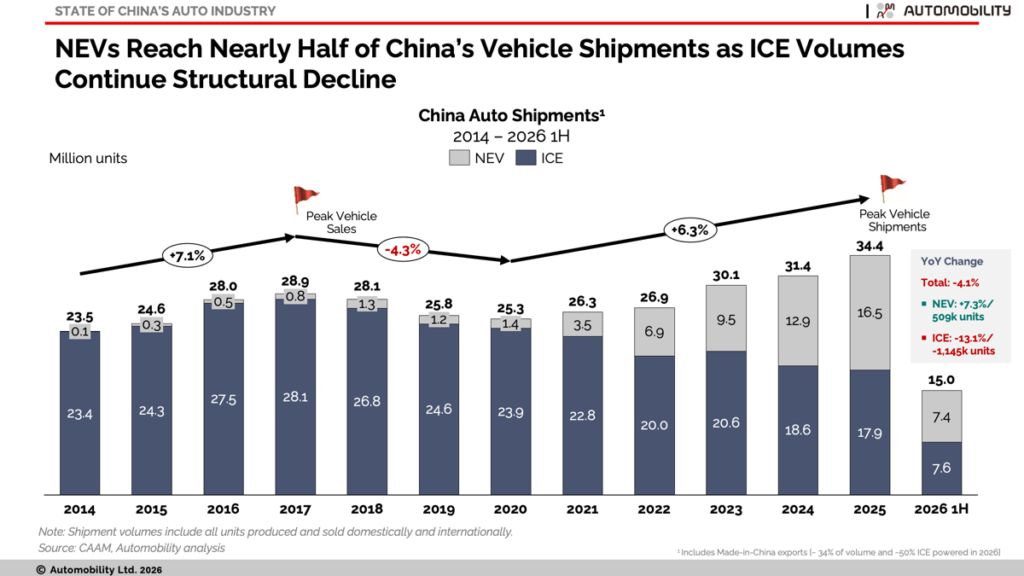
Figure 1: China Auto Shipments (2014-20261H)
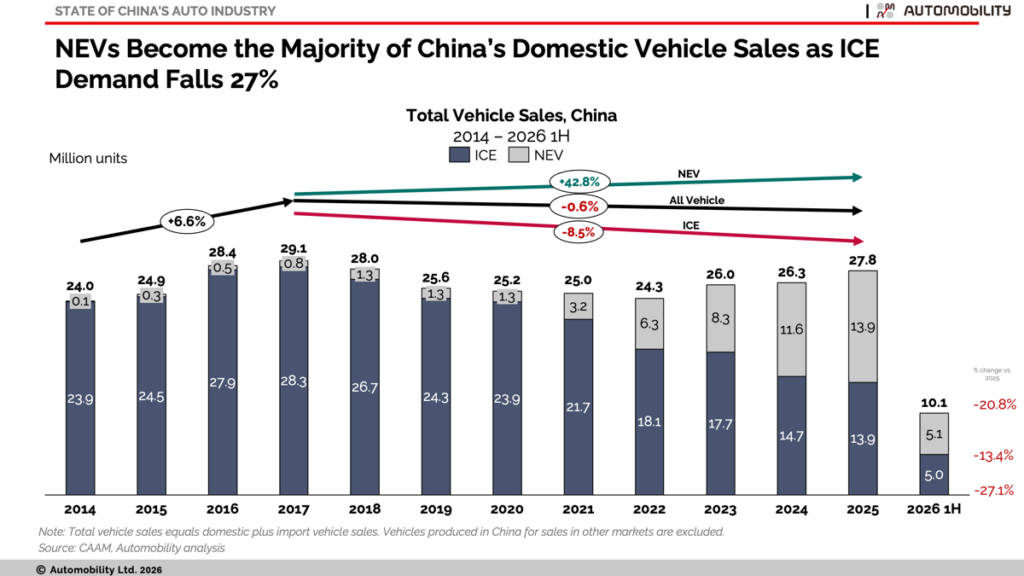
Figure 2: China Total Vehicle Sales (2014-20261H)
However, the headline figures only tell part of the story.
The aggregate numbers, however, mask an important structural divergence within the market.
Adjusting for the temporary pull-ahead in demand created by 2025 subsidy policy changes, the underlying trend becomes much clearer. Over the past two years, domestic ICE sales have been the only major segment in sustained decline. Domestic NEV demand has remained comparatively resilient, while exports—particularly NEV exports—have expanded rapidly (Figure 3).
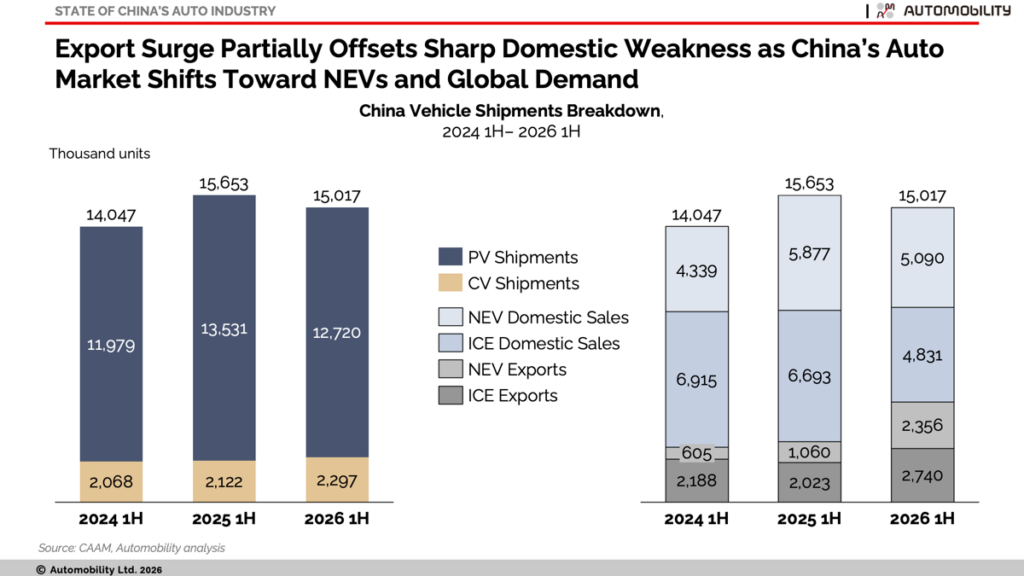
Figure 3: China Vehicle Shipments Breakdown (20241H-20261H)
This structural divergence is fundamentally reshaping the priorities of Chinese OEMs. Slowing domestic demand, persistent price competition, and compressed profitability are reducing opportunities for growth at home. At the same time, manufacturing capacity built during years of rapid market expansion increasingly depends on overseas demand to maintain utilization and support healthy business economics.
Exports have therefore evolved from an incremental growth opportunity into a strategic necessity. For many Chinese OEMs, overseas markets are no longer simply destinations for additional sales—they have become essential to sustaining production scale, improving capacity utilization, and supporting long-term profitability.
This changing market backdrop is fundamentally altering the strategic calculus of China’s automotive industry. Export growth is no longer just a commercial opportunity; it is becoming a critical component of industrial sustainability. But as export volumes continue to rise, the industry’s globalization strategy is beginning to evolve once again. The next phase will be defined not simply by selling more vehicles overseas, but by establishing a lasting industrial presence in global markets.
2. Export Was the Beginning—Localization Is the Destination
The rapid expansion of vehicle exports established China as a global automotive power. But exports were never the end state of globalization—they were the first stage.
When we first introduced our Globalization Pathway Framework in 2024 (Figure 4), Chinese OEMs were rapidly expanding into overseas markets through exports.
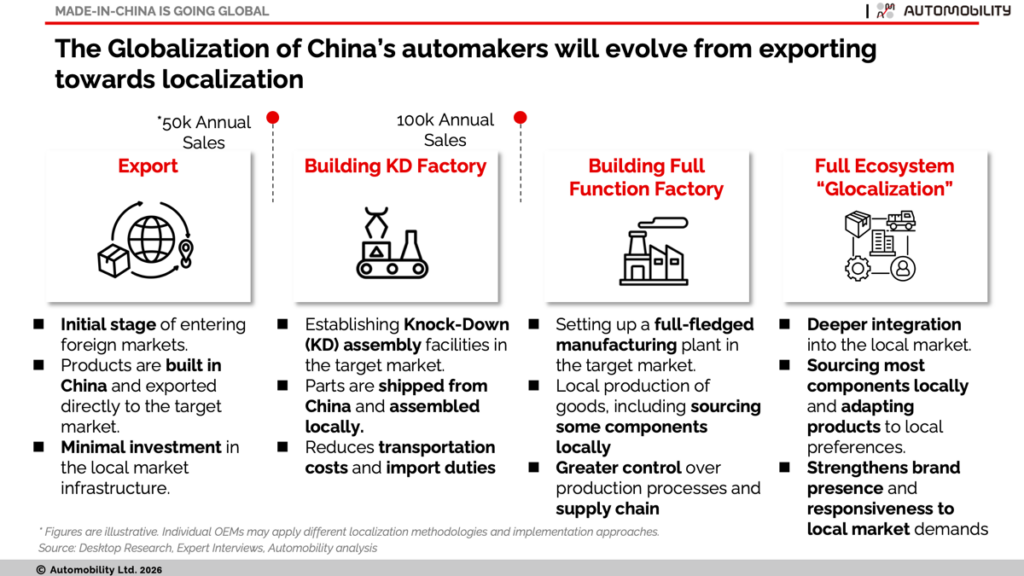
Figure 4: Globalization Pathway Framework
That strategy proved highly successful. China exported a record 7.1 million vehicles in 2025, and based on first-half performance, annual exports in 2026 could exceed 11 million units (Figure 5). For many leading Chinese OEMs, overseas markets are no longer peripheral businesses—they have become essential to sustaining manufacturing scale, improving capacity utilization, and supporting long-term profitability.
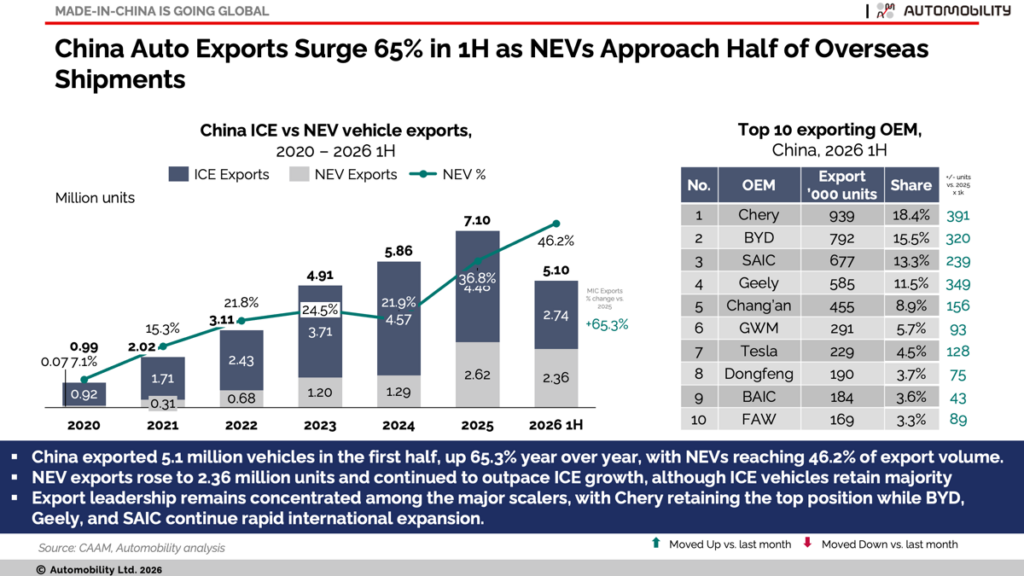
Figure 5: China Vehicle Exports and Top 10 Exporting OEMs
The export-led model enabled Chinese OEMs to test overseas demand, establish distribution networks, build brand recognition, and expand internationally with relatively limited capital investment. It provided a fast, flexible, and relatively low-risk pathway into global markets.
However, success creates its own strategic challenges.
As overseas volumes continue to scale, the economics of globalization begin to change. Rising tariffs, higher logistics costs, local content requirements, currency exposure, and growing expectations for domestic investment all increase the advantages of manufacturing closer to end markets. Once exports reach sufficient scale, localization becomes not simply an option, but an increasingly rational business decision.
This transition marks the beginning of China Going Global 2.0.
Unlike the first phase of globalization, which was defined primarily by exports, Going Global 2.0 is characterized by the localization of industrial capabilities. Chinese OEMs are beginning to establish manufacturing operations, develop regional supply chains, invest in engineering capabilities, and build longer-term industrial footprints in overseas markets.
Importantly, this is not a single localization model. Chinese OEMs are pursuing multiple approaches depending on their strategic objectives, available partners, industrial assets, policy environments, and market conditions. The pathway differs from market to market, but the destination is increasingly the same: transforming Chinese automakers from exporters into globally embedded industrial participants.
The question is therefore no longer whether Chinese OEMs will localize manufacturing overseas. The more important question is how they will do it.
That question is explored in the next section.
3. China Going Global 2.0
The defining characteristic of China Going Global 2.0 is the transition from exporting vehicles to embedding industrial capabilities within overseas markets. Localization is not simply about manufacturing closer to customers—it is the process through which Chinese OEMs become long-term participants in regional automotive ecosystems.
Manufacturing is typically the first major industrial decision, while deeper integration into local supply chains, engineering capabilities, talent development, and regional operations remains the longer-term destination. Although today’s localization initiatives remain largely manufacturing-led, they signal a broader shift in how Chinese OEMs intend to compete internationally.
Most Chinese OEMs are still at an early stage of this transition. Initial projects often begin with local vehicle assembly while continuing to rely on components, battery systems, and key technologies supplied from China. Over time, local sourcing, engineering activities, supplier development, and regional management capabilities are expected to expand. The pace and depth of localization, however, will vary significantly depending on market conditions, policy requirements, partner capabilities, and each company’s long-term strategic objectives.
Our research suggests that Chinese OEMs are converging around four distinct manufacturing localization strategies (Figure 6). These approaches differ in ownership structure, capital intensity, implementation speed, and degree of industrial integration, but they all pursue the same strategic objective: establishing a durable local industrial presence.
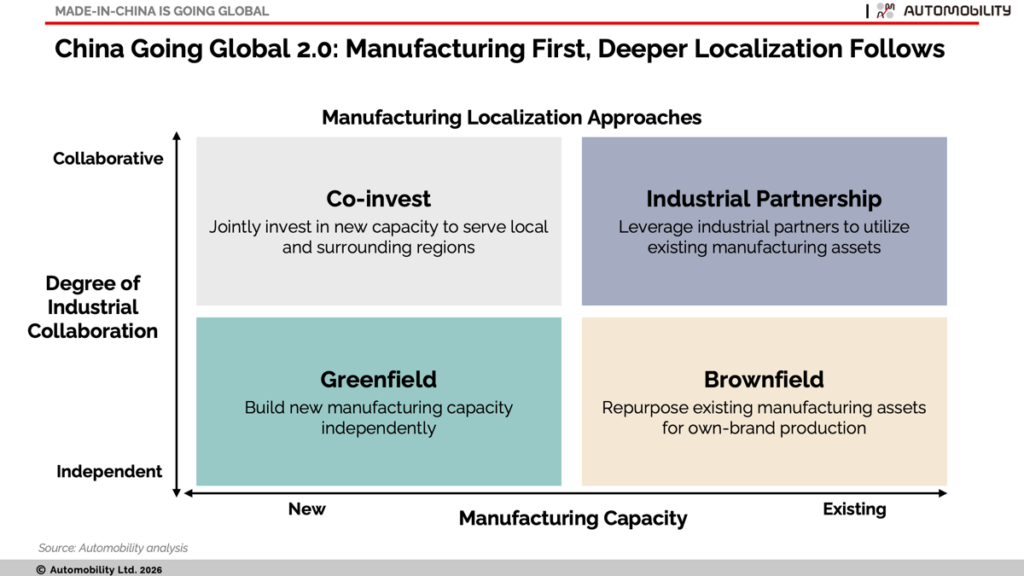
Figure 6: Manufacturing Localization Approaches
Importantly, these are not sequential stages or a hierarchy of maturity. Rather, they represent alternative strategic choices shaped by factors including available industrial assets, partner capabilities, regulatory conditions, investment requirements, and speed to market. Many OEMs will ultimately employ multiple approaches simultaneously across different regions.
No single localization strategy is inherently superior. Greenfield investments maximize operational control and long-term flexibility but require significant capital and longer implementation timelines. Brownfield approaches accelerate market entry by repurposing existing industrial assets. Co-investment models share investment risk while leveraging local market knowledge and relationships. Industrial Partnerships combine complementary strengths between incumbent manufacturers and Chinese OEMs, creating value for both parties while accelerating localization.
The following examples illustrate how Chinese OEMs are applying each of these strategies across different markets and competitive environments.
Greenfield
The Greenfield approach involves independently establishing new manufacturing capacity. It provides OEMs with the greatest degree of operational control and flexibility to design production around future products, technologies and expansion plans. However, it also requires the highest capital commitment, the longest development timeline and greater execution risk.
SAIC MG Spain
In June 2026, SAIC announced plans to invest approximately €200 million to establish MG’s first continental European manufacturing facility in Galicia, Spain, with planned annual production capacity of 120,000 vehicles from 2028. The Greenfield investment strengthens MG’s long-term manufacturing presence in Europe, improves supply chain responsiveness and reduces exposure to trade barriers, while creating a platform for progressively expanding local manufacturing capabilities.
BYD Hungary
Announced in December 2023, BYD’s passenger vehicle plant in Szeged, Hungary is the company’s first European passenger car manufacturing facility. The project represents an investment of approximately €4 billion, with an initial annual production capacity of 150,000 vehicles, expandable to 300,000 vehicles, and production scheduled to begin in late 2026. Beyond manufacturing, BYD has since expanded its commitment by establishing its European headquarters and R&D centre in Budapest in 2025, reinforcing Hungary’s role as the company’s long-term manufacturing, engineering and operational hub for Europe.
Brownfield
The Brownfield approach repurposes existing manufacturing assets for local production. Compared with Greenfield investments, it requires lower capital expenditure, shorter implementation timelines and enables faster market entry by utilizing underused industrial capacity. As legacy automotive manufacturers restructure globally, Brownfield opportunities are becoming an increasingly attractive localization pathway.
Chery UK
In June 2026, Chery and Nissan signed a non-binding Memorandum of Understanding to explore manufacturing Chery vehicles at Nissan’s Sunderland plant in the UK, with production potentially commencing in 2027. Rather than building a new factory, the proposal would utilize Nissan’s underused Line One capacity while Nissan retains ownership and operation of the facility. The arrangement would improve plant utilization for Nissan while giving Chery a faster route to local manufacturing in the UK.
BYD Brazil
In July 2023, BYD announced plans to transform Ford’s former manufacturing complex in Camaçari, Bahia, into its largest production base outside Asia, with a total investment of R$5.5 billion. The plant commenced operations in October 2025, with initial annual production capacity of 150,000 vehicles and long-term expansion planned to 600,000 units. Initially operating through SKD assembly, the facility is progressively increasing local production and supplier sourcing, positioning Brazil as BYD’s manufacturing base for Latin America.
Co-invest
The Co-invest approach involves jointly investing with a local partner to establish new manufacturing capacity. It enables OEMs to share capital requirements, leverage local market knowledge and build manufacturing capabilities with the support of an established domestic partner.
SAIC–CP Thailand
In 2013, SAIC Motor and Thailand’s Charoen Pokphand (CP) Group established SAIC Motor-CP Co., Ltd., forming a joint venture to build a new manufacturing facility in Chonburi, Thailand. The plant commenced operations in 2014 with an initial production capacity of approximately 50,000 vehicles per year, later expanding to support MG’s growing presence in Thailand and Southeast Asia. By combining SAIC’s manufacturing expertise with CP Group’s local business network, the joint venture accelerated MG’s localization strategy and established Thailand as one of its key regional production hubs.
Industrial Partnership
The Industrial Partnership approach leverages collaboration between Chinese OEMs and incumbent automotive manufacturers to utilize or transform existing industrial assets. Rather than building new factories or acquiring existing facilities outright, both parties contribute complementary capabilities to create mutual value. As global automotive manufacturers seek to improve capacity utilization while Chinese OEMs pursue faster localization, this model is emerging as one of the most distinctive—and potentially transformative—characteristics of China Going Global 2.0.
Geely-Ford Spain
In July 2026, Ford and Geely announced plans to establish a Europe-focused manufacturing joint venture at Ford’s Valencia plant, with Ford holding a 66% stake and Geely 34%. Expected to commence operations in 2027, the JV will manufacture three Ford models and two Geely electric SUVs from 2028, while also co-developing a new multi-energy crossover for Ford. By combining Ford’s manufacturing assets and European industrial footprint with Geely’s product and technology capabilities, the partnership improves plant utilization, reduces manufacturing costs and accelerates Geely’s European localization strategy, illustrating a new form of industrial collaboration emerging under China Going Global 2.0.
Dongfeng–Stellantis France
In May 2026, Dongfeng and Stellantis announced plans to establish a Europe-based joint venture, with Stellantis holding 51% and Dongfeng 49%, to jointly manage sales & distribution, manufacturing, purchasing and engineering activities for Dongfeng’s new energy vehicles in Europe. The partnership will initially focus on distributing Dongfeng’s Voyah brand in selected European markets, while also evaluating localized production at Stellantis’ Rennes plant in France. Building on their 34-year partnership in China, Dongfeng and Stellantis are effectively taking a long-established China joint-venture model overseas—combining European manufacturing and market access with Dongfeng’s competitive NEV products and China-based industrial capabilities.
Chery–EBRO Spain
In April 2024, Chery and Spain’s EBRO EV Motors established a joint venture to restart vehicle production at the former Nissan Barcelona plant, with a long-term target of 150,000 vehicles annually by 2029. Production commenced in November 2024, initially assembling EBRO-branded SUVs under a CKD model, with progressive localization planned over time. By 2026, the joint venture expects to produce 25,000–30,000 vehicles, demonstrating how Chinese technology and products can be combined with local brands, industrial assets and manufacturing capabilities to accelerate localization while revitalizing existing automotive infrastructure.
Although these four approaches differ in structure and execution, they reflect a common strategic direction. Chinese OEMs are moving beyond exporting vehicles toward establishing long-term industrial capabilities within overseas markets. Manufacturing localization is therefore not the end objective, but the first step in a broader process of industrial integration. The strategy selected today will influence not only the speed of market entry, but also the OEM’s long-term ability to develop local suppliers, engineering capabilities, regional partnerships, and sustainable competitive advantage.
4. The Flip of the Script
The emergence of multiple manufacturing localization models sends an important signal: Chinese OEMs are no longer simply seeking export markets. They are increasingly willing to invest, manufacture, employ local workers, develop suppliers, and establish long-term industrial positions within overseas markets.
The conversation is no longer simply about trade. It is increasingly about where the next generation of automotive industrial ecosystems will be built.
This distinction is important.
Traditional policy responses have largely focused on limiting vehicle imports through tariffs and other trade measures. While such actions may influence the flow of imports, they are far less effective at preventing long-term industrial expansion. As we often describe it: “When you build a dam in a river, the water simply finds another path.”
Tariffs may redirect globalization, but they rarely stop it. Faced with higher trade barriers, Chinese OEMs are increasingly adapting their strategies by localizing production, investing in manufacturing assets, and embedding themselves more deeply within regional automotive ecosystems. The pathway may change, but the underlying commercial and industrial logic remains the same.
For governments, this creates a strategic choice.
Three decades ago, China welcomed foreign automotive investment under policies designed to maximize long-term industrial development. Foreign manufacturers established local production, transferred technology, developed domestic suppliers, trained local talent, and helped build what would eventually become the world’s largest automotive manufacturing ecosystem.
Today, China Going Global 2.0 presents other countries with a similar opportunity.
Rather than viewing Chinese investment solely through the lens of imports and trade deficits, governments can shape localization strategies to advance broader industrial objectives. Thoughtful industrial policy can encourage investments that strengthen domestic manufacturing, create skilled employment, develop supplier capabilities, expand engineering expertise, and enhance the long-term competitiveness of local automotive industries.
The objective should not simply be to manage imports. It should be to maximize the long-term economic value created by industrial investment.
Tariffs may buy time, but industrial policy determines whether that time becomes a period of industrial renewal—or merely delays inevitable structural change.
5. Rethinking China Going Global
China Going Global 2.0 represents a structural shift in the evolution of the global automotive industry. It is not simply the next stage of export growth, but the transition from exporting products to localizing industrial capabilities. While today’s initiatives remain largely manufacturing-led, they signal a broader transformation in how Chinese OEMs intend to compete internationally. Ultimately, success will be measured not by the number of vehicles exported, but by the ability to build sustainable industrial ecosystems, trusted partnerships, and enduring competitive positions outside China.
Localization extends well beyond manufacturing. Long-term competitiveness will depend on developing local supplier networks, investing in engineering and talent, adapting products to regional market requirements, building trusted relationships with governments and industry stakeholders, and becoming fully integrated participants within local automotive ecosystems. Manufacturing is only the beginning; industrial integration is the destination.
For OEMs, suppliers, investors, and policymakers alike, understanding China Going Global 2.0 is no longer optional. The strategies being adopted today will shape the geography of automotive manufacturing, technology development, and industrial competitiveness for decades to come.
For governments and industry leaders, this transition presents both challenges and opportunities. The critical question is no longer whether Chinese automakers will globalize—they already have. The more important question is how countries will respond. Those that respond only through the lens of tariffs and trade restrictions risk overlooking the larger opportunity created by industrial investment. Those that develop thoughtful industrial strategies can leverage this new wave of investment to strengthen domestic manufacturing, create skilled employment, expand supplier capabilities, expand engineering expertise, and enhance long-term industrial competitiveness.
History offers an important lesson. Three decades ago, China welcomed foreign automotive investment not simply to create jobs, but to build an internationally competitive automotive industry. Through local manufacturing, supplier development, technology transfer, and talent development, foreign investment became one of the foundations of China’s automotive transformation. Today, China Going Global 2.0 presents other markets with an opportunity to apply many of those same principles in reverse.
The winners in this next phase of globalization will not necessarily be those that export the most vehicles, but those that build the strongest industrial ecosystems and the deepest local partnerships.
The next chapter of automotive globalization will not be defined by where vehicles are exported. It will be defined by where industrial ecosystems are built, where innovation is localized, and who chooses to participate in creating them.
About the Authors
Bill Russo is the Founder and CEO of Automobility Ltd , and is currently serving as the Chairman of the Automotive Committee at the American Chamber of Commerce in Shanghai. His over 40 years of experience includes 15 years as an automotive executive with Chrysler, including 22 years of experience in China and Asia. He has also worked nearly 12 years in the electronics and information technology industries with IBM and Harman. He has worked as an advisor and consultant for numerous multinational and local Chinese firms in the formulation and implementation of their global market and product strategies. Bill is a contributing author to the book Selling to China: Stories of Success, Failure, and Constant Change (2023), where he describes how China has become the most commercially innovative place to do business in the world’s auto industry – and why those hoping to compete globally must continue to be in the market.
Contact Bill by email at bill.russo@automobility.io
Jackie Tang is the Regional Director, Asia Operations at Automobility Limited. Her experience spans strategic consulting, mobility, digital platforms and autonomous-driving technologies, with a particular focus on China’s automotive transformation and the globalization of Chinese automotive companies. She has advised multinational and Chinese firms on market strategy, business development and new business models across the shared, electrified, connected and autonomous mobility sectors. Jackie has also led several pioneering initiatives from concept development through commercialization and implementation.
Contact Jackie by email at jackie.tang@automobility.io
About Automobility
Automobility Limited is global Strategy & Investment Advisory firm based in Shanghai that is focused on helping its clients to Build and Profit from the Future of Mobility. We help our clients address and solve their toughest business and management issues that arise in midst of fast changing, complicated and ambiguous operating environment. We commit to helping our clients to not only “design” the solutions but also raise or deploy capital and assist in implementation, often together with our clients.
Contact us by email at info@automobility.io
PLEASE NOTE: The information and analysis shared in this article, including the charts and style of materials presented, is the intellectual property of Automobility Ltd. While we share it as a way to serve our existing and new clients, it is not to be used without our express consent and then only with attribution. Any publication, reproduction or other use of this material without the express written consent of Automobility Ltd is prohibited.
Sorry, the comment form is closed at this time.